Non-profit development NGO · Lubumbashi, DR Congo
Communities that stay self-reliant long after the project ends.
With women, young people and vulnerable households, UBORA runs community savings, entrepreneurship, sustainable agriculture, training and post-crisis recovery projects across the Democratic Republic of the Congo.
What we do
Eight programmes, one principle: people stay in charge.
Studies, training, awareness-raising, equipment and project delivery, in the fields set out in our statutes.
Who we serve
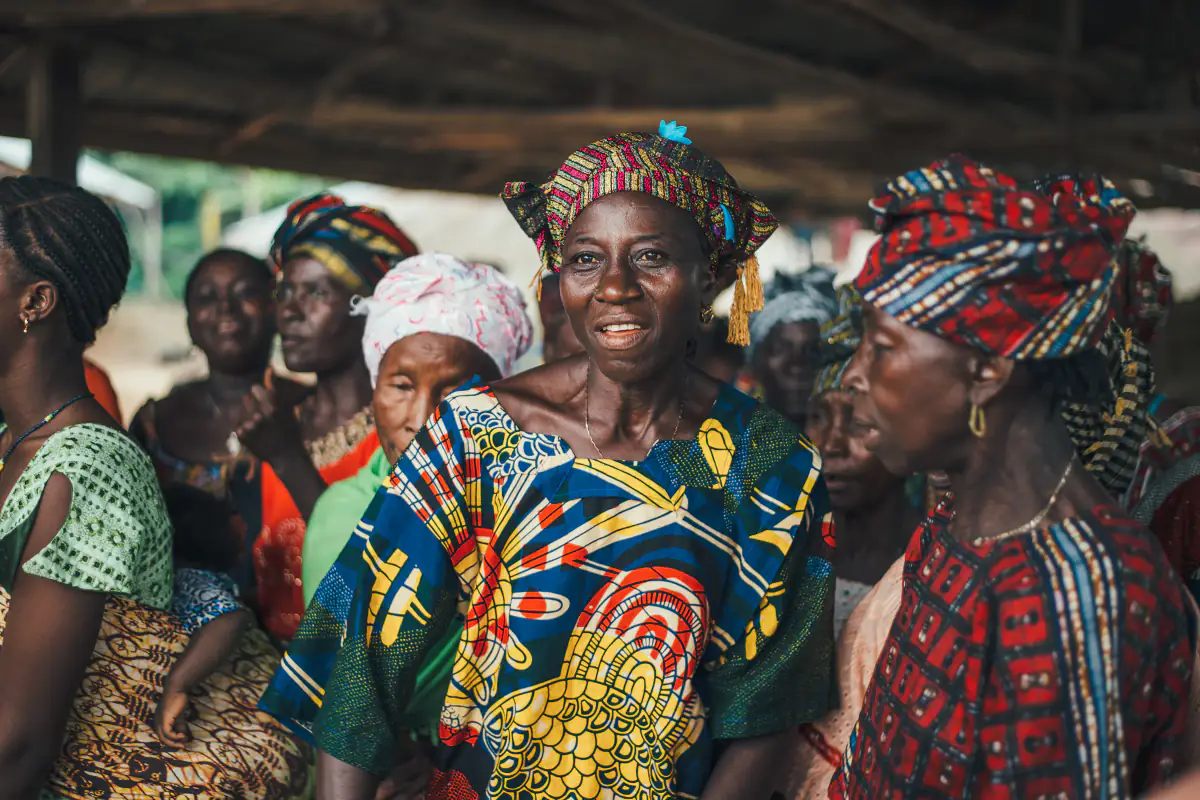
People that mainstream services do not reach.
Our projects first target people who cannot pay for support. Donations and grants fund what no paid service would cover.
- Women
- Young people
- People with disabilities
- Low-income rural and peri-urban households
- Displaced or crisis-affected people
- MSMEs, cooperatives and community organisations
Our method
From assessment to self-reliance, in six steps.
Every project follows the same path. From day one, it plans for the moment the community carries on without us.
One NGO, one company: two separate roles
The NGO runs the projects. The social enterprise sells the solutions.
Two separate legal entities, each with its own governing bodies, accounts and funding. This website presents the association only.
The UBORA association
- Runs development and humanitarian projects
- Funded by donations, grants and membership fees
- Works with beneficiaries free of charge
- Sells no software, subscriptions or commercial services
Ubora Social Enterprise
- Sells the digital solutions and their subscriptions
- Offers paid training, consulting and services
- Reinvests its surplus in social impact
When an association project uses a tool or service from the company, a written agreement sets out usage rights, costs and data ownership. It is approved by the members with no conflict of interest.
Accountability
Tracked funds, open accounts, complaints that are heard.
Our statutes set precise rules. They apply to every project, whoever the donor.
Act with us
Everyone can help a project move forward.
Donors and technical and financial partners
Entrust us with implementing a project, or start with a pilot whose indicators we agree together.
Our partnership modelsAuthorities and community organisations
Flag a need in your area, suggest a group to support, and let us coordinate our work.
Write to usIndividuals, diaspora and volunteers
Make a donation, become a member of the association, or give your skills to a project.
Get involvedHome · About us
The UBORA association
A non-profit association under Congolese law, with the status of a development non-governmental organisation. Non-political, non-denominational and independent.
Self-reliant, resilient Congolese communities able to take a lasting part in economic and social development.
To contribute to community development, especially for women, young people and vulnerable groups, through inclusive entrepreneurship, community savings, training, appropriate innovation, market access, sustainable agriculture and responsible resource management.
Our values
Six values, written into our statutes.
- ExcellenceCareful work, measured and improved.
- IntegrityNo funds ever held in a personal account.
- Inclusion and equityNo discrimination of any kind.
- AccountabilityReporting to beneficiaries and donors.
- ParticipationCommunities decide with us.
- SustainabilityResults that last after the project.
Legal identity
Who we are, on paper.
Official documents are available on request for partners and authorities.
| Name | UBORA, acronym "UB-ONG" |
|---|---|
| Legal form | Non-profit association (ASBL) with development NGO status |
| Legal basis | Law No. 004/2001 of 20 July 2001 |
| Founded | Founding general assembly held in Lubumbashi on 1 November 2025, seven founding members |
| Registered office | Avenue Mapendo No. 11, Kalubwe 2, Lubumbashi, Haut-Katanga |
| Area of operation | The provinces of the DRC, with project offices as needed |
| Statutes and rules | Authenticated on 20 November 2026 by the Ministry of Justice (Chancellery and Legal Identity Directorate, Kinshasa/Gombe) |
| Administrative status | Legal personality under review Application registered with the Ministry of Justice on 24 November 2026, file No. F.92/61.892 |
Governance
Bodies that check one another.
Light governance, compliant with the law, with internal control that is independent from the board.
General Assembly
All full members. The supreme body: strategy, budget, accounts and election of the board.
Board of Directors
A chair, a secretary and a treasurer elected by the assembly. It meets at least once a quarter.
Internal Audit Committee
Members independent from the board. At least one review a year, with a written report to the assembly.
Executive management
Optional, appointed by the board as needed. No automatic banking powers.

Christian Cubaka Katulanya
Represents the association before partners and authorities.
Association and social enterprise
Who does what.
The association and Ubora Social Enterprise share a name, but not their resources or their activities.
| The UBORA association (NGO) | Ubora Social Enterprise | |
|---|---|---|
| Nature | Non-profit association with development NGO status, Law No. 004/2001 | Commercial company with a social purpose, RCCM CD/KNM/RCCM/24-A-04755 |
| Resources | Donations, grants, membership fees | Sales of solutions and services |
| Activities | Development projects, humanitarian aid, awareness-raising, community training | Digital solutions (AKIBA, Ubora Hub, Ubora Académie, ASBL Manager…), paid training, consulting |
| For whom | Beneficiary communities, free of charge | Customers: organisations, businesses, groups |
| Surplus | Never distributed, reallocated to activities | Mostly reinvested in social impact |
| Link between the two | A written agreement for each tool or service the association uses, approved by members with no conflict of interest and reported to the general assembly. No exclusivity, no automatic transfer of funds. | |
Home · Programmes
Our programmes
Seven development fields and one crisis response programme. Each can run on its own or be combined with others in the same area.
Home · Achievements
Our achievements
What the association has done, project by project, with figures that can be verified. UBORA was founded in November 2025: this page grows with every project.
Projects
Every project, with its results.
Location, period, partner, number of people supported and measured results: each project sheet uses the indicators agreed with the partner.
Our first projects are being prepared
The association is building its first partnerships. Each project will be presented here with its objectives at launch, then with its actual results once measured. We publish no figure we cannot back up.
Milestones
Where we start from.
The steps taken since the association was founded, and the ones ahead.
Founding general assembly
In Lubumbashi, seven founding members adopt the statutes of UBORA, a non-profit association with development NGO status.
Application for legal personality
The Chair of the Board applies to the Minister of Justice for legal personality, under Law No. 004/2001.
Statutes and internal rules authenticated
The statutes and internal rules of procedure are authenticated by the Chancellery and Legal Identity Directorate of the Ministry of Justice, in Kinshasa/Gombe.
Public launch
The uborardc.org website goes live in French and English, and the contact@uborardc.org address opens.
File registered
The Ministry of Justice acknowledges receipt of the application: the "UB-ONG" association's file is registered under No. F.92/61.892 and is under review.
Legal personality order
Signature by the Minister of Justice of the order granting legal personality, once the file is complete.
First pilot project
A small scope, indicators agreed with a partner, results tracked in real time and published on this page.
Our commitment
What every project sheet will include.
The starting objectives
The indicators agreed with the partner, published at launch.
The people supported
Their number, disaggregated by sex and age, without ever exposing their identity.
The measured results
What was achieved, and what was not, with the reasons why.
Partners and funding
Who funded the project, how much, and what the money was used for, with the donor's agreement.
Photos taken with consent
Only people who agreed to be photographed.
The full report on request
Narrative and financial reports shared with partners and authorities who ask for them.
Home · Our approach
Our approach
Listen before acting, start small, measure continuously, and plan the exit from day one.
The project cycle
Six steps, from assessment to self-reliance.
Monitoring and evaluation
Results you can see during the project, not only at the end.
Data is entered in the field, even without a network, and syncs as soon as a connection is available.
- Indicators agreed with the partner
- Data disaggregated by sex and age
- Shared dashboards
- Narrative and financial reports
- Final evaluation
Our principles
What guides every intervention.
Do no harm
The social and environmental effects of each project are assessed before it starts.
Humanitarian principles
Humanity, impartiality, neutrality and independence. Aid is given according to need, without discrimination.
Community participation
Beneficiaries are consulted on projects and on their results.
Gender equality
We aim for at least one third women in every governing body and project committee.
Data protection
Beneficiaries' data is protected and only shared with their consent.
Coordination
We work with local authorities, technical services and the other actors in the area.
Report abuse or make a complaint
Zero tolerance for sexual exploitation, abuse and harassment. Any beneficiary, staff member or partner can report a problem confidentially. The person who reports is protected.
Home · Partners
Working with UBORA
For donors, UN agencies, international NGOs and public programmes looking for an implementing partner rooted in Lubumbashi.
Partnership models
Four ways to work together.
Pilot project
A small scope, indicators agreed together, results tracked in real time. Ideal for a first partnership.
Project implementation
We run a project end to end: teams, activities, monitoring, narrative and financial reporting.
Consortium and local partner
We join your consortium as the local partner, bringing our knowledge of the field and of the communities.
Capacity building
Training for your teams, for community facilitators and for local partner organisations.
What we guarantee
Management you can verify.
Restricted funds are used only as set out in the signed agreements. Every commitment follows our written procedures.
Restricted funds tracked separately
Separate tracking for each agreement, monthly bank reconciliations, no funds in personal accounts.
Segregation of duties
No one initiates, approves and executes the same transaction.
Approved accounts and audit
Annual accounts approved by the general assembly. External audit when the law or the partner requires it.
Declared conflicts of interest
Purchases from related entities follow transparent rules and donor requirements.
Partner file
Documents available on request.
We are building our first institutional partnerships. Write to us to receive our file.
- Statutes of the association
- Internal rules of procedure
- Composition of the Board of Directors
- Authentication deed of the statutes and internal rules (20 November 2026)
- Acknowledgement of the legal personality application (file No. F.92/61.892)
- Overview of programmes and of the monitoring and evaluation system
- Team references
Home · Get involved
Get involved
Give, join, offer your time or your skills: every contribution goes to a specific project, and you know which one.
Fund a project
Companies, foundations, diaspora associations: fund an identified project and receive its reports.
Write to us →Make a donation
Write to us to receive the donation details (bank transfer or Mobile Money). Every donation is receipted.
Get the details →Become a member
Full, supporting or associate member. Applications for full membership are reviewed by the Board of Directors.
Apply →Volunteer your skills
Trainers, agronomists, accountants, developers, students: join a project according to your availability.
Offer my help →
Transparency
Your donation, traced all the way to the field.
Donations earmarked for a project serve that project only. Board members are volunteers. The accounts are approved every year by the general assembly.
Home · Contact
Contact us
Tell us where you stand and what you want to move forward. We reply within two working days, in French or English.
Lubumbashi, Haut-Katanga, DR Congo
For a complaint or a report, choose "Confidential complaint or report" in the form. Your message is handled confidentially.